
Storm Damage Repair in the USA
Wind and hail strike roofs at different angles. High gusts pry up shingle tabs along the lower edge and loosen the sealant strip. Hail leaves circular dents that crack the surface coating and expose the fiberglass mat. Our technicians map every impact point before any work begins.
Heavy rain follows wind and finds the opened gaps. Water travels under the underlayment and reaches the deck. Shawnee County Roofing Services replaces only the affected courses when the rest of the roof remains sound and secures new nails in the proper location above the sealant line. Shawnee County Roofing Services explains underlayment shifts in storm damage repair cases right on the main roof repair page.
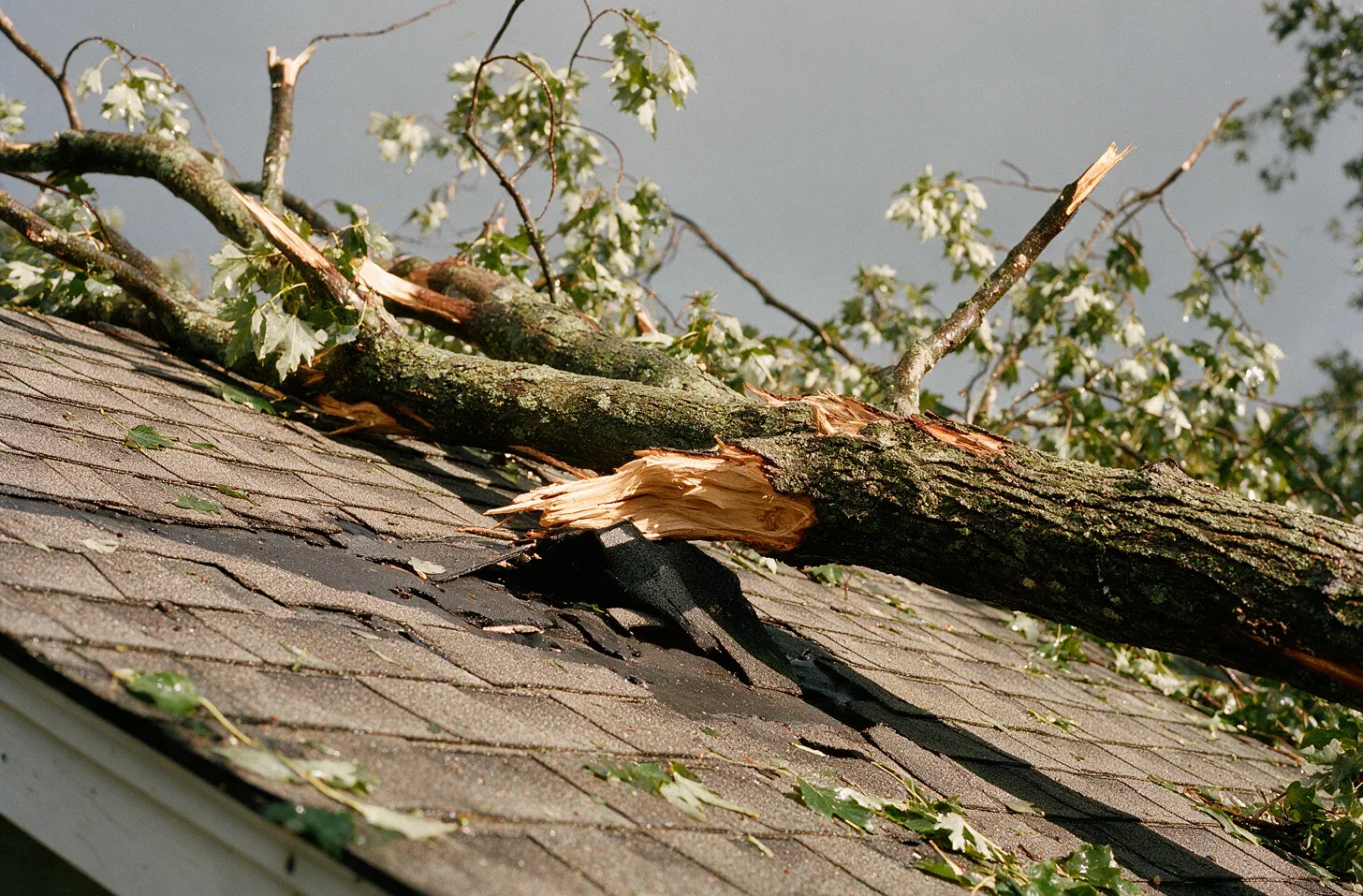
Visible Indicators After Storms
- Shingle tabs raised at the lower corners.
- Granule loss in small round patterns on the ground.
- Dents visible on metal vents and pipe boots.
- Water stains on interior ceilings after rain stops.
- Nail heads pushed up along horizontal rows.
Inspection Steps on the Roof
Technicians start at the ridge and work downward. They check each shingle row for lifted corners, torn tabs, and missing granules. A straightedge reveals whether the deck has soft spots where water has soaked through the felt. Measurements record the distance between damaged areas and the nearest ridge cap or valley.
Flashing receives separate attention. Technicians lift the bottom edge of step flashing and look for rust or pulled nails. They measure the overlap on chimney counter flashing and note any sealant that has pulled away. Every measurement is recorded before the team returns to the ground.
Material Choices for Replacement
Three-tab shingles match older roofs when only scattered damage exists. Architectural shingles provide thicker coverage on slopes that receive repeated wind. Both types use the same nail pattern: one nail on each side of the tab, driven straight and flush. Underlayment is replaced in strips wide enough to cover the felt tear and extend past the next course.
Pipe boots are cut from pre-formed rubber and seated with a bead of compatible sealant. Ridge vent sections are reinstalled with the same nail spacing used originally. Color is matched to the remaining field so the repair blends without drawing attention to the replaced area.
Repair Sequence Followed by Crews
Damaged shingles are removed first. The crew clears old nails from the deck and sweeps granules away so the new underlayment lies flat. New shingles are slid into place so the nail line sits directly above the sealant strip of the course below. Each nail is driven to the depth recommended by the shingle manufacturer.
Valleys receive new metal when the original piece is bent or punctured. The metal is nailed along the outer edges only and covered by the shingles on both sides. Final checks include walking the repaired section and confirming no tabs lift when pressure is applied from the upslope side.
First Actions for Property Owners
Stay off the roof. Walking on wet or damaged shingles can widen existing tears and create new entry points for water. Photograph the exterior from ground level and note the date and time of the storm. Move any vehicles or outdoor items away from the building edges before crews arrive.
Place buckets under active interior drips and avoid using attic insulation that has become wet. Contact Shawnee County Roofing Services with the photos so the team can prepare the correct quantity of matching shingles and flashing before the site visit.
Storm Damage Repair questions
What causes wind to lift shingles?
Wind enters under the leading edge of a tab and pushes upward. When the factory sealant strip has aged or was not pressed during installation the tab stays raised. Repeated gusts then tear the shingle at the nail line.
How do crews decide which shingles to replace?
Technicians mark every dent and tear. They replace a full course when damage crosses more than one tab. Isolated hits receive single shingle swaps. The goal is to maintain consistent nailing and sealant coverage across the repaired section.
Can flashing be reused after a storm?
Flashing is left in place only if it remains straight, shows no rust holes, and still overlaps the roof plane by the required distance. Bent or punctured pieces are cut out and replaced with new metal of matching profile.
What should be checked on gutters after high winds?
Loose hangers allow the gutter to tilt and trap debris. Technicians tighten or replace hangers so the slope directs water away from the fascia. They also clear any shingle granules that have washed into the trough.
Storm Damage Repair Across the USA
Shawnee County Roofing Services restores roofs after wind and hail. Call to schedule an inspection of your roof.