Shawnee County Roofing Services addresses roofing problems by first locating the actual water path rather than the visible stain. Our technicians lift shingles along suspected courses to inspect felt tears, examine step flashing overlaps for gaps, and test gutter slopes for overflow points that push water back under the edge.
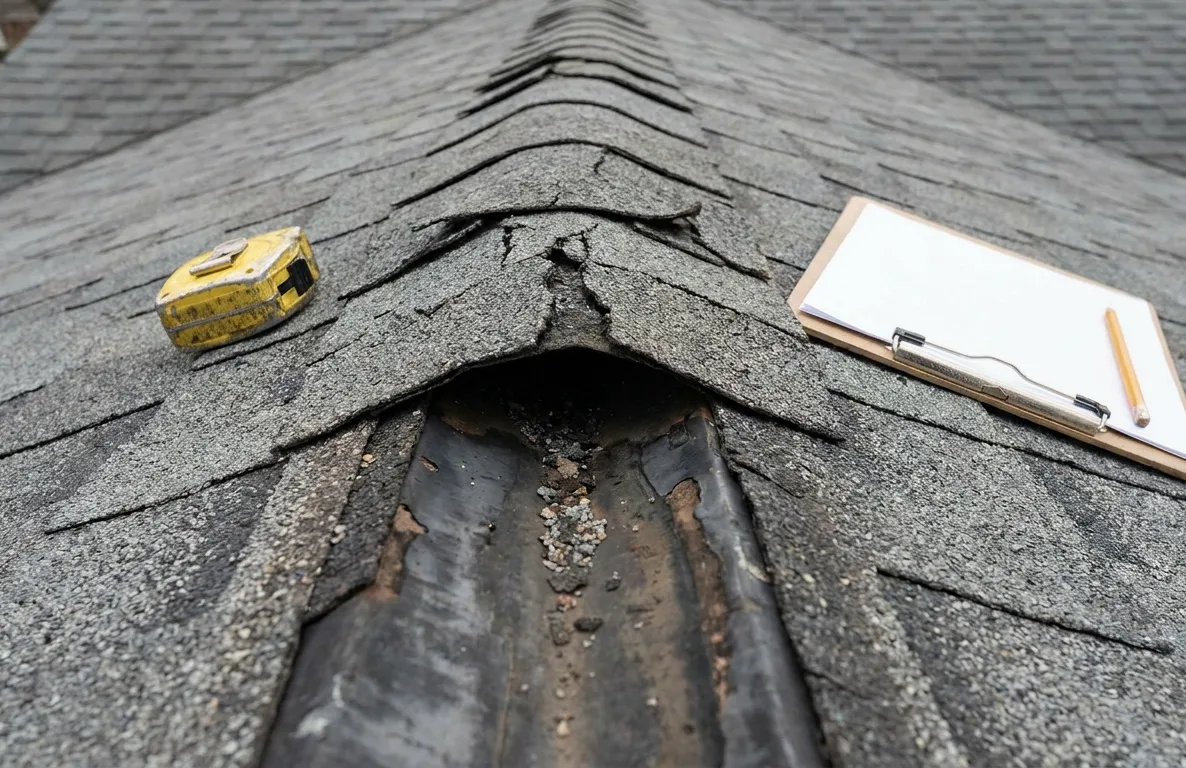
Each service targets a specific failure point. Roof Leak Repair follows moisture trails through decking joints. Shingle Replacement removes wind-lifted tabs and resets the nailing pattern. Flashing Repair reseals valleys and wall intersections where metal has pulled away from the substrate. Every service below is available from Shawnee County Roofing Services across the USA.
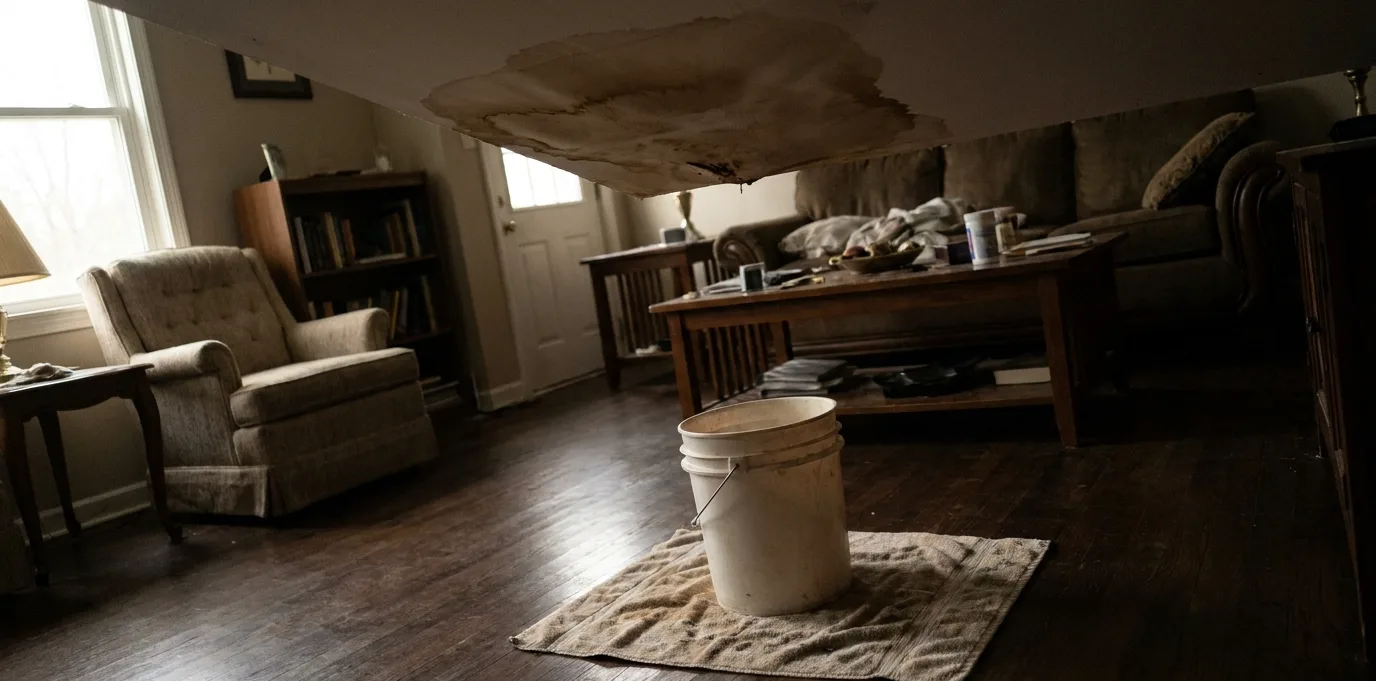
Our technicians trace leaks by following water stains upward to the roof plane. They check for missing granules along valleys, lifted nail heads allowing seepage, and deteriorated felt under cracked shingles. Temporary tarps are placed only after the entry point is marked so interior drying can begin safely.
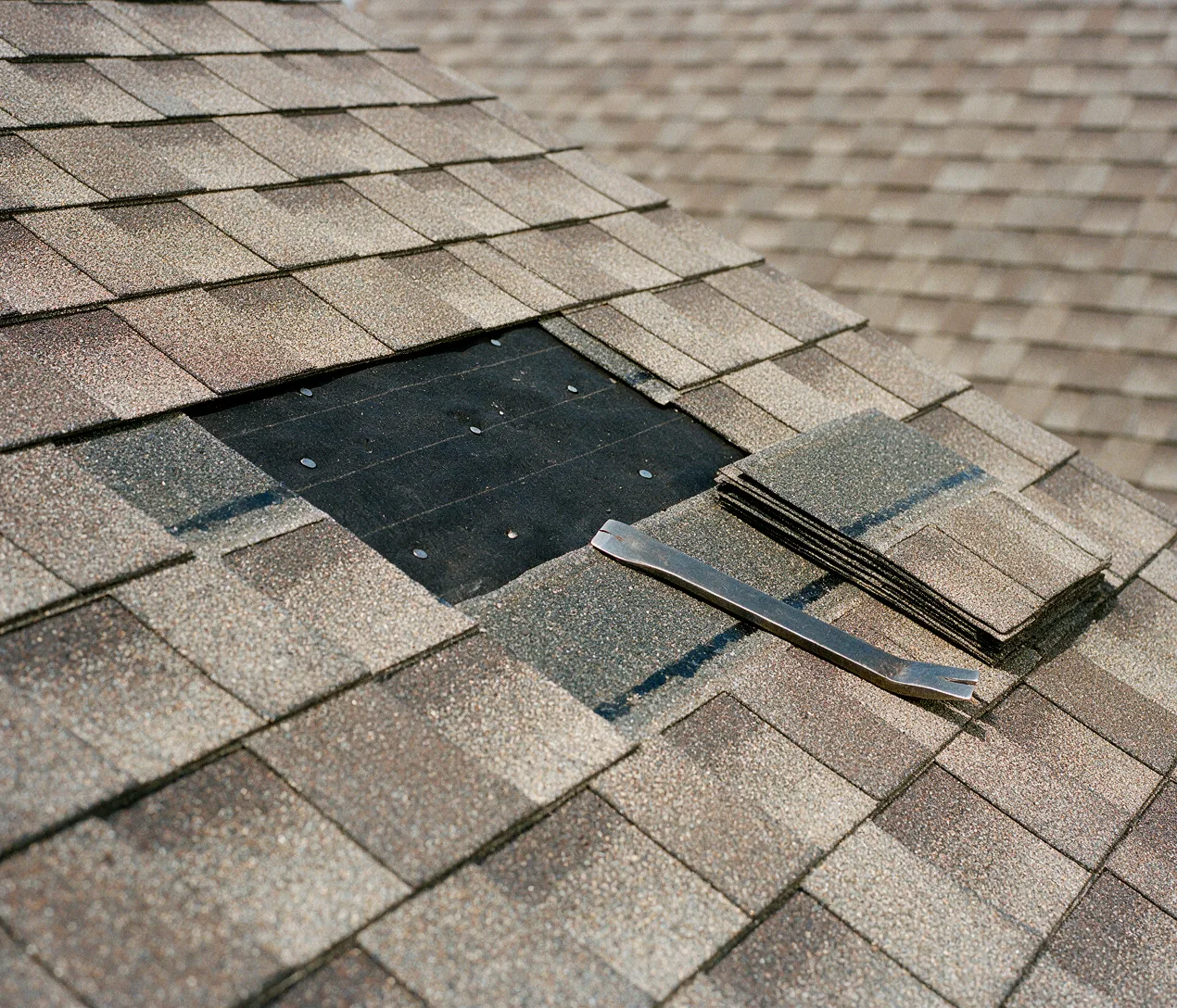
Technicians remove individual damaged tabs without disturbing surrounding courses. They verify the underlying felt remains intact, then install new shingles with the correct offset and nail placement above the tar strip. This prevents new wind entry points from forming along the repaired row.
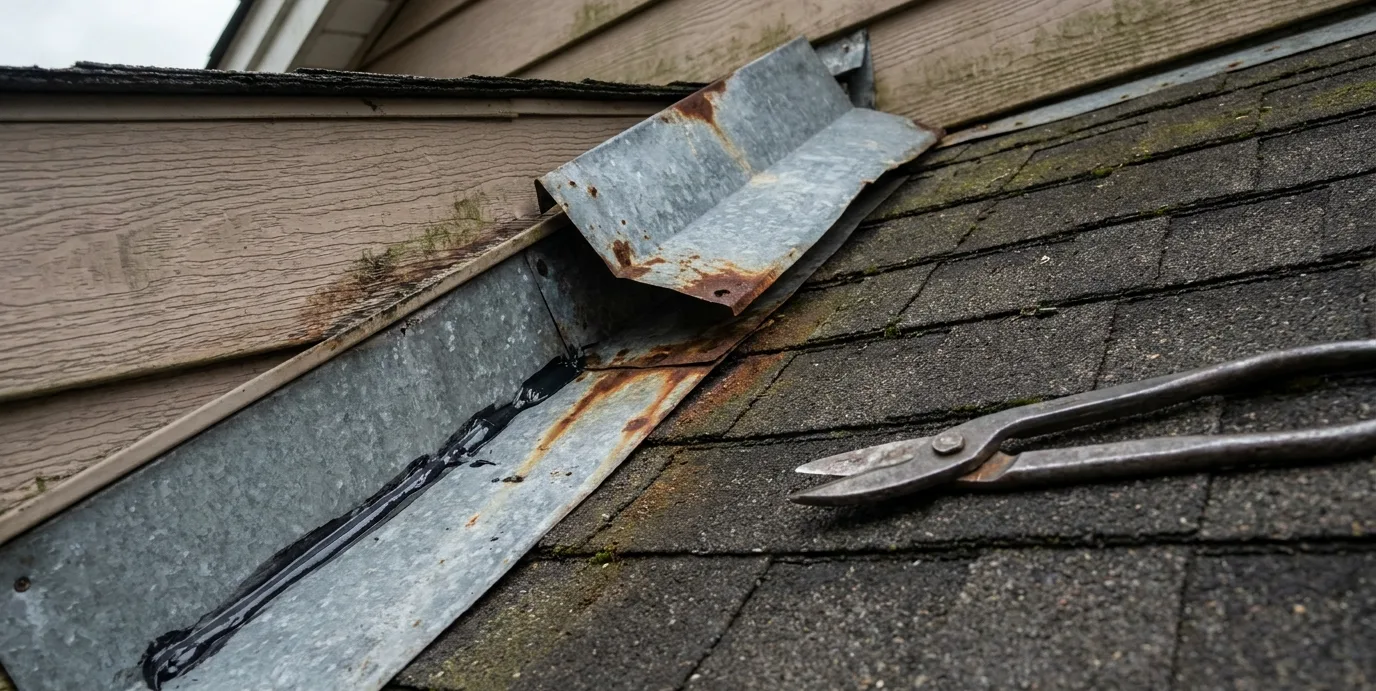
Metal counterflashing at walls and chimneys is checked for sealant failure and nail pop. Technicians slide new step flashing under existing shingles, re-crimp the top edge, and apply compatible sealant only at the top lip to maintain drainage direction.
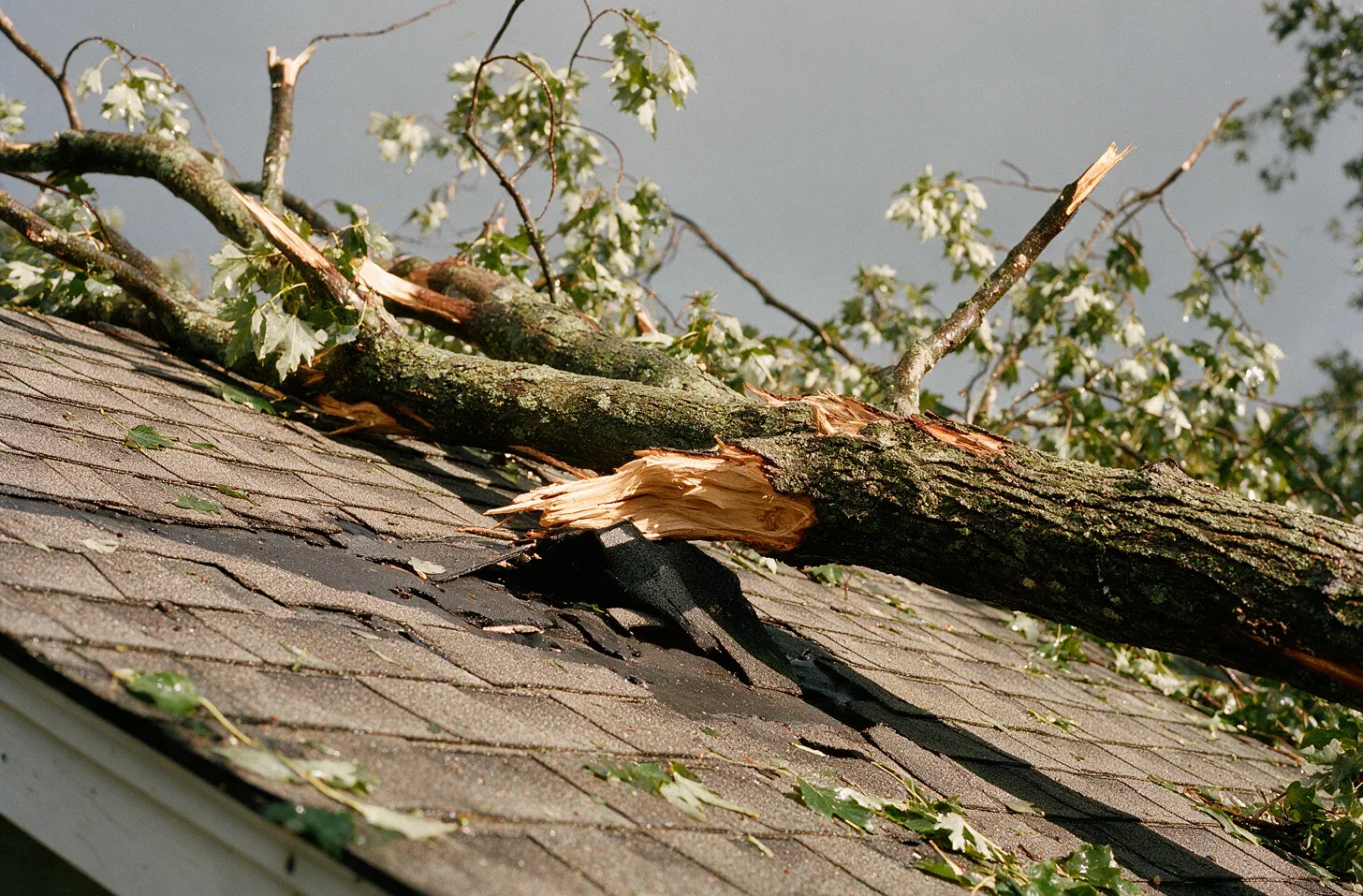
After high winds or hail, crews inspect for granule loss exposing mat fibers, creased shingles that no longer lay flat, and dented flashing that has lost its slope. Affected areas are isolated so only damaged sections receive new material while the rest of the roof stays undisturbed.
Technicians walk the entire surface noting shingle condition at ridges, valley debris accumulation, and soffit ventilation gaps. They probe soft decking spots from above and below to determine if moisture has reached the sheathing before recommending any work.
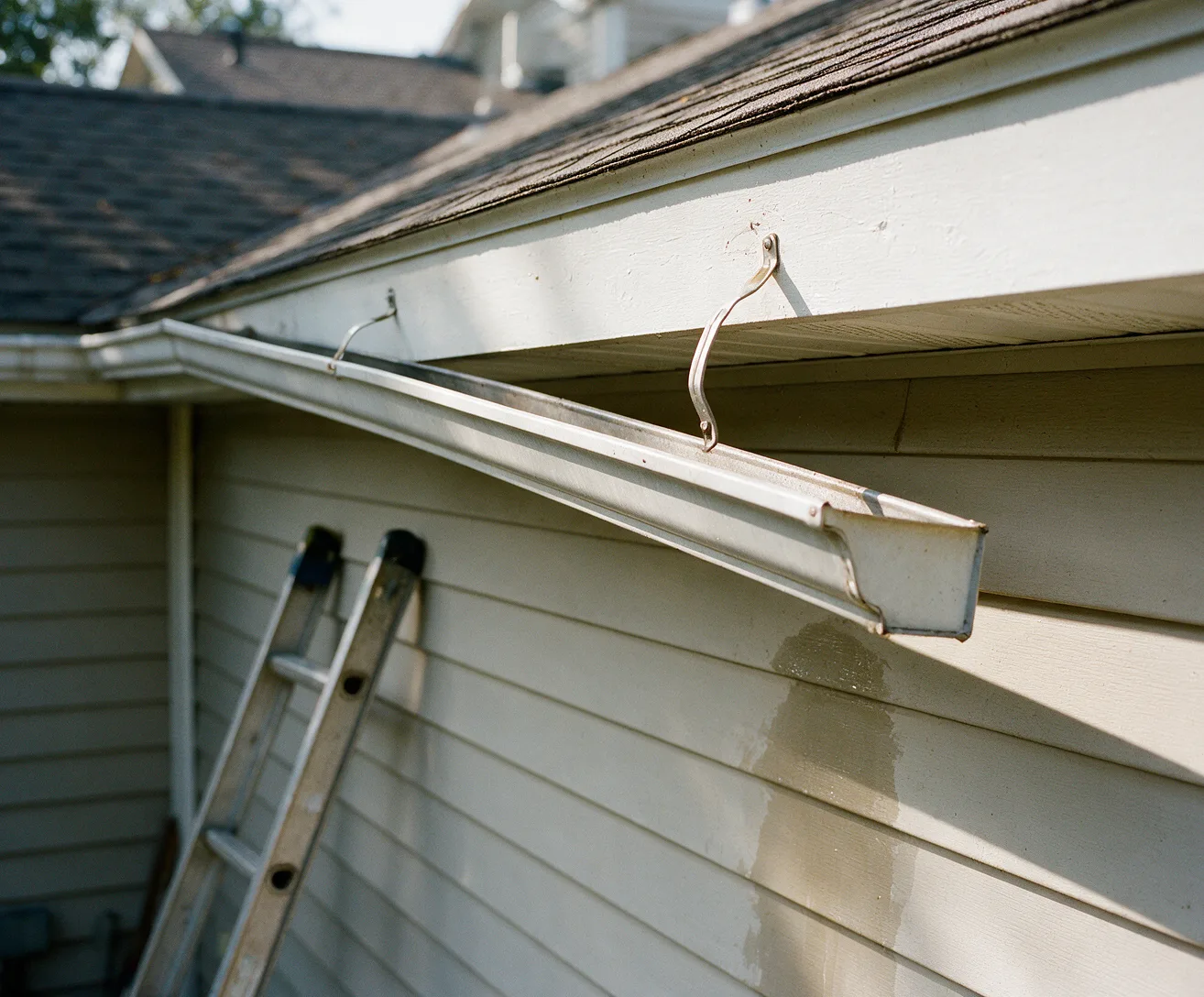
Technicians check hanger spacing, seam sealant condition, and slope using a level. They clear debris that blocks flow near downspouts, tighten loose hangers, and replace sagging sections so water exits away from the foundation rather than backing up under eaves.
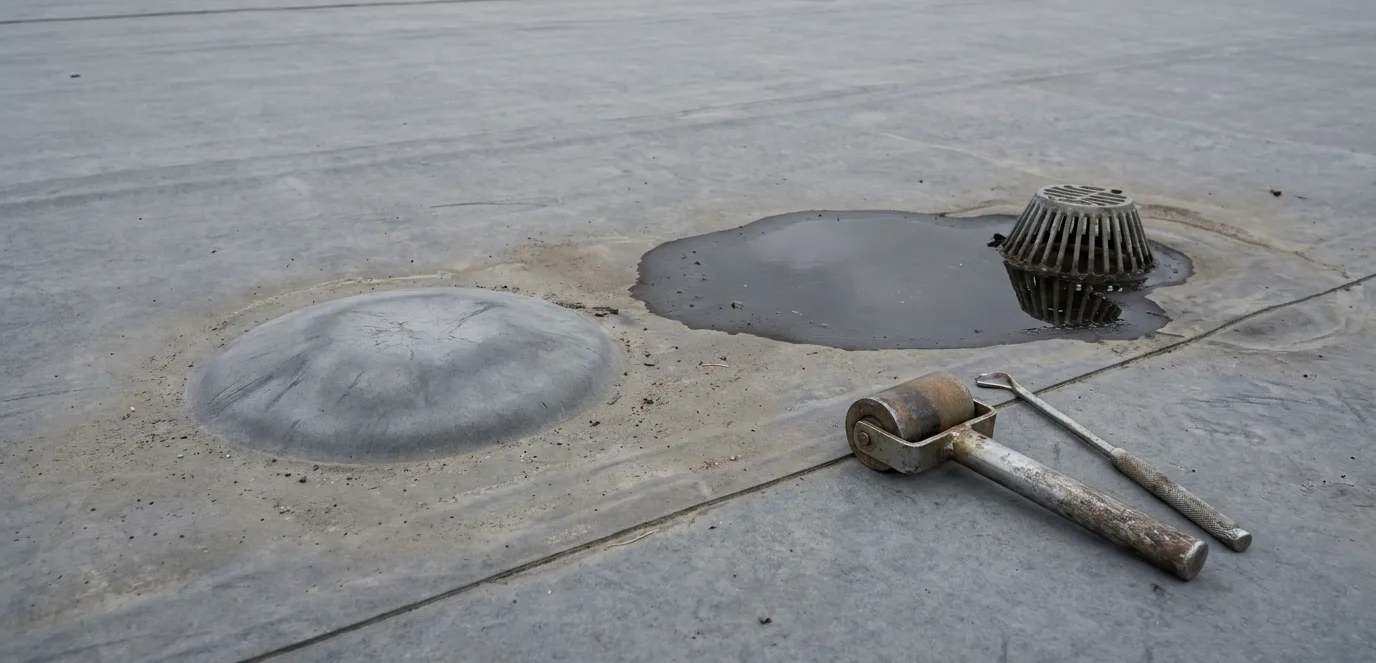
Membrane blisters are cut open to dry the insulation below. Technicians apply new reinforced patches over the cut edges, ensuring the patch extends beyond the original damage and maintains positive drainage toward scuppers.
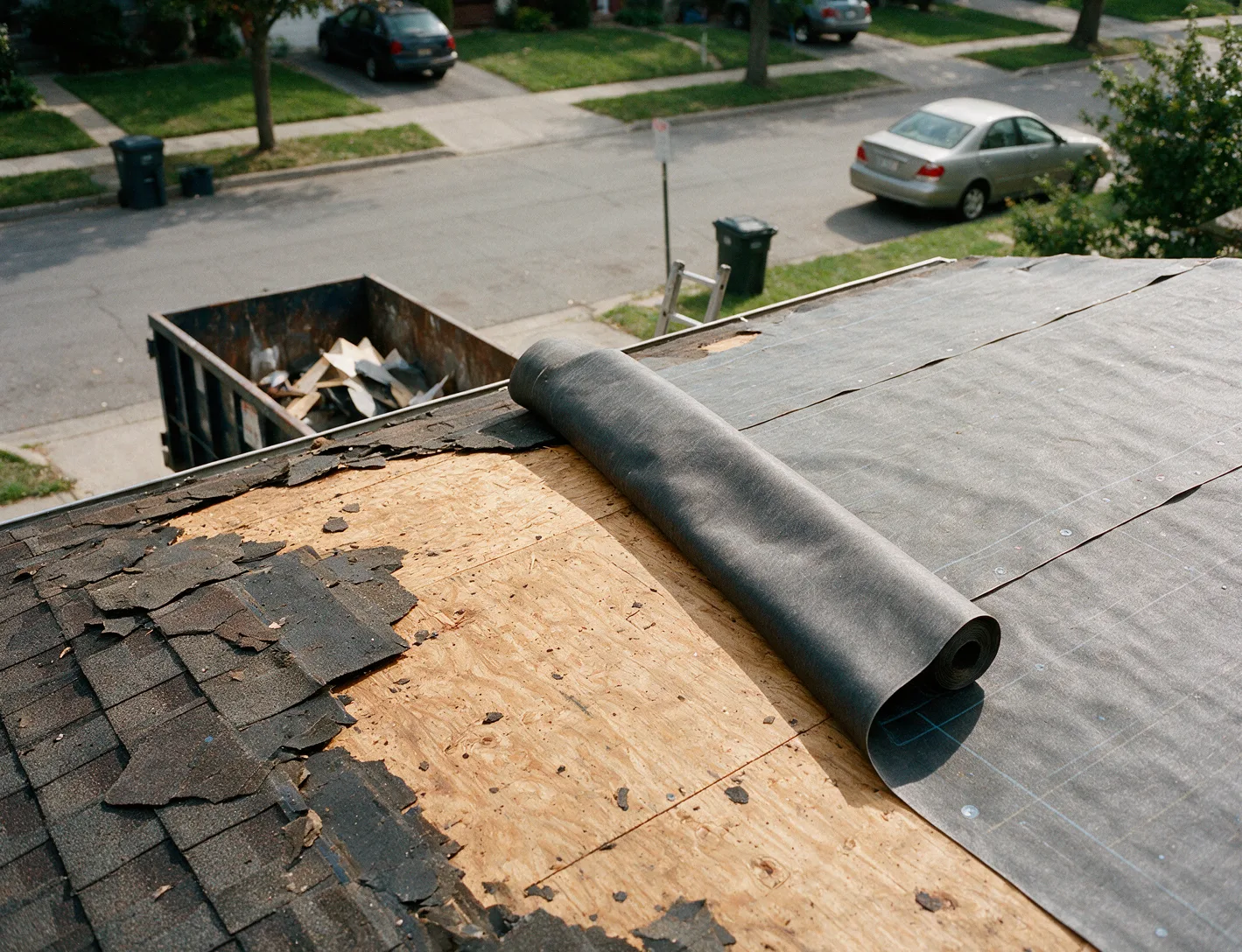
When multiple layers show widespread granule loss or repeated leak repairs, technicians remove all existing material down to the deck. New underlayment is rolled with proper overlaps at eaves and valleys before shingles are installed in straight courses.
Matching the visible problem to the needed service
Water stains on a ceiling usually indicate a leak that has traveled along rafters or through deck joints. Look first for lifted shingles or clogged valleys above that area. Missing tabs after wind point to shingle replacement rather than full replacement unless the underlayment is also wet across many courses.
Dented flashing or granule loss after storms calls for targeted storm damage work. Sagging gutters that overflow during rain suggest gutter repair before leaks appear. Soft spots felt when walking the roof indicate the need for inspection to decide between repair and replacement.