
Flashing Repair in the USA
Flashing directs water away from roof-to-wall intersections and penetrations. When metal bends, corrodes, or pulls loose, water travels under shingles and soaks sheathing. Shawnee County Roofing Services sends technicians to assess these points before damage reaches interior ceilings or insulation.
Our crews measure overlap distances on step flashing, check nail placement above the water line, and test counter flashing embedment in masonry. Proper angles and clearances keep runoff moving past the roof edge instead of backing up under the underlayment. Checking nail lines comes first when Shawnee County Roofing Services arrives for any flashing repair before the roof repair overview.
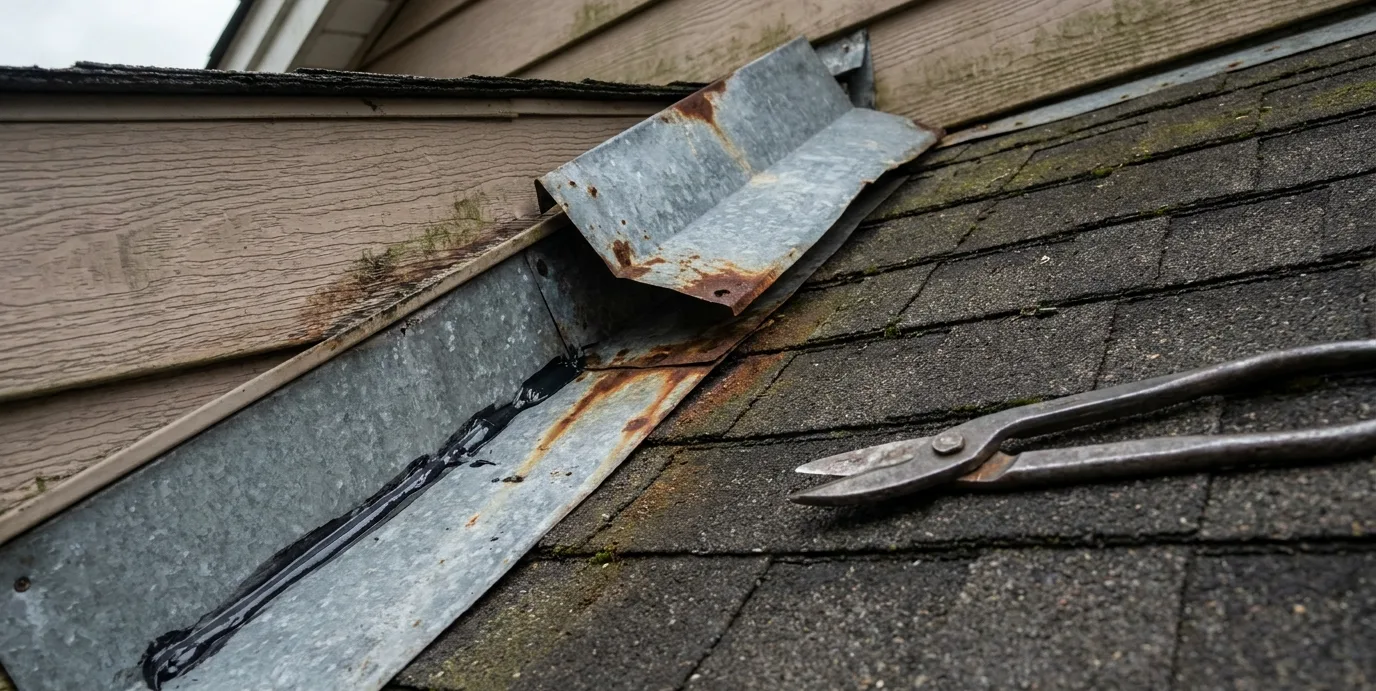
Visible Clues Around Flashing
- Dark streaks running down wall surfaces below roof edges
- Curling or lifted shingle tabs along vertical walls
- White chalky residue on metal edges from corrosion
- Soft spots in decking near chimney bases
- Drips appearing at ceiling lines after heavy rain
How Flashing Fails
Thermal movement pulls nails or opens seams where metal meets asphalt. Wind-driven rain then forces water through the gap and into the roof deck. Technicians trace these paths by lifting shingles along the joint and checking for rotted felt.
Masonry chimneys shift over time and crack the mortar that holds counter flashing. Once that seal breaks, water follows the brick joints downward. Shawnee County Roofing Services replaces the flashing with longer legs that reach deeper into the reglet cut.
Inspection Steps on Site
Technicians first walk the perimeter and note any missing or raised pieces of step flashing. They measure the height of counter flashing above the roof plane and verify that each course overlaps the next by at least two inches. Nail lines are checked to confirm fasteners sit above the expected water flow.
Valley flashing receives extra attention because converging slopes increase volume and speed. Crews look for dents that create low spots and for sealant that has dried and cracked. Underlayment is probed at the edges to detect hidden moisture.
Repair and Replacement Choices
Small sections of step flashing can be swapped without disturbing the entire course. New pieces are slid under the shingles above and over the ones below, then nailed in a staggered pattern. Sealant is applied only at the top edge so water can escape downward.
Full chimney flashing replacement requires cutting a fresh reglet, installing new step and counter pieces, and rebuilding the cricket if one exists. Shawnee County Roofing Services uses preformed corners to reduce seam count and improve water shedding at the front edge.
Materials and Fastening Details
Galvanized steel offers strength at lower cost but needs paint after cuts. Aluminum resists corrosion better in coastal air yet dents more easily. Copper lasts longest and weathers to a protective patina but requires different expansion joints.
Homeowners should first clear loose debris from around flashing edges and note any new interior stains. Avoid climbing to apply caulk, because most products trap moisture when placed over existing cracks and make later diagnosis harder for the crew.
Flashing Repair questions
What usually causes flashing to leak?
Nails back out from wood movement, seams open from expansion cycles, and counter flashing pulls away from masonry joints. Water follows these paths under shingles and reaches the deck. Proper overlap and nail placement above the water line prevent most issues.
Can flashing be repaired without full roof work?
Yes, isolated sections of step or counter flashing can be replaced while leaving the surrounding shingles intact. Technicians lift only the needed courses, install new metal with correct overlaps, and reseal the top edges only.
How do crews choose between metal types?
They match the existing material where possible and consider exposure to wind, sun, and salt air. Galvanized works for most inland slopes, aluminum for moderate corrosion zones, and copper where longest service life is required.
What should a homeowner check before calling?
Look for dark streaks on exterior walls, lifted shingles along chimneys, and interior ceiling marks after storms. Note the location and take photos from the ground so the crew can plan access and materials.
Flashing Repair Across the USA
Contact Shawnee County Roofing Services to schedule an inspection of roof intersections and penetrations.