
Roof Inspection in the USA
Shawnee County Roofing Services sends technicians to examine every roof section from ridge to eave. They walk the surface to check shingle alignment, measure granule loss in gutters, and probe flashing joints around vents and chimneys for gaps that allow water migration into the deck.
During a Roof Inspection our crews also enter the attic to scan for daylight around nail lines, feel insulation for damp spots, and test rafter spacing for sagging. These steps reveal how air movement and heat buildup affect underlayment life and where future repairs should focus. After handling roof inspection our technicians recommend the USA wide roof repair details at Shawnee County Roofing Services.
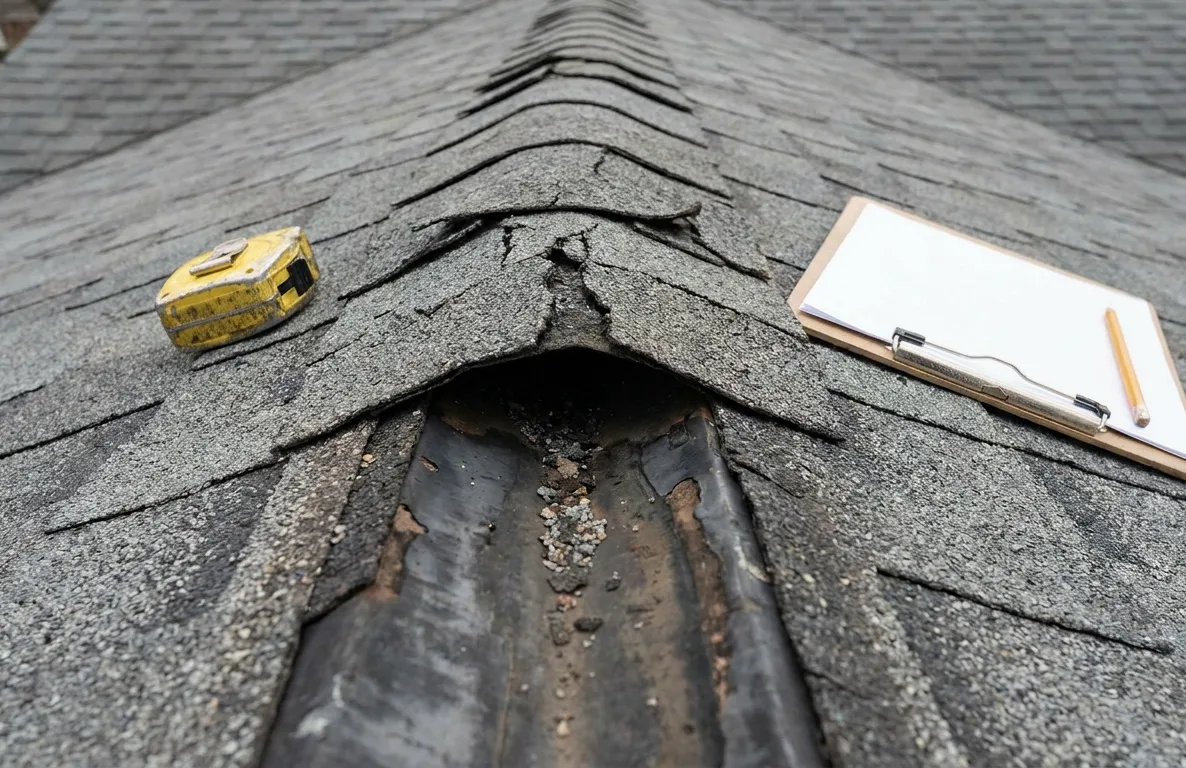
Visible Indicators During Roof Inspection
- Granule piles collecting in gutters after heavy rain.
- Nail heads lifting above shingle surface along rows.
- Flashing edges pulling away from wall intersections.
- Daylight spots visible from attic around pipe boots.
- Soft spots in decking felt when walking the roof plane.
What Technicians Measure on Every Roof Inspection
Technicians record shingle tab exposure and check for proper overlap at the headlap line. They measure the distance between nail lines to confirm the underlayment remains covered and not exposed to ultraviolet rays that break down felt layers.
Crews also verify ridge vent openings remain clear of debris and measure soffit intake gaps to confirm balanced airflow. Blocked vents cause moisture to condense on the underside of the deck, leading to rot that starts at the eaves and moves inward.
Flashings receive close attention where they meet valleys. Technicians lift the metal edge to inspect sealant condition and look for rust perforations that let water track under adjacent shingles.
Common Causes Found During Roof Inspection
Wind-driven rain forces water beneath lifted shingle edges when sealant strips lose adhesion after repeated freeze-thaw cycles. Once water reaches the underlayment it travels along nail penetrations into the deck.
Poor attic ventilation allows warm moist air to rise and collect at the ridge. Over time this moisture saturates wood sheathing and creates conditions where mold forms on the top surface of the insulation.
Aging pipe boots crack where the rubber meets the flashing collar. Technicians trace the resulting stain lines down the rafters to locate every entry point created by the failed seal.
Repair Options After Roof Inspection
When inspection reveals isolated flashing failures our technicians replace the damaged sections with new step flashing and reseal joints with compatible caulk rated for metal-to-asphalt contact. This prevents water from migrating behind siding.
For deck areas showing moisture damage crews cut out the affected plywood, install new sheathing matched to existing thickness, and cover it with ice-and-water shield before reinstalling shingles. Matching the original shingle profile maintains the roof plane.
If underlayment has deteriorated along the eaves our crews install new synthetic underlayment from the drip edge up to the first course of shingles. This layer directs water that blows under tabs into the gutters rather than the attic.
What Homeowners Can Check Before Inspection
Stand on the ground and scan the roofline for sagging sections or missing shingles at the ridge. Note any areas where shingles appear darker from granule loss and mark those spots for the crew to examine first.
Inside the attic use a flashlight to look along rafters for dark streaks or mold. Feel the insulation near plumbing vents and chimneys for dampness and record the locations to share when the technicians arrive.
Clear leaves and debris from gutters so water can flow freely during the inspection. This lets technicians observe how drainage performs and whether downspouts direct water away from the foundation.
Roof Inspection questions
How often should a Roof Inspection occur?
Shawnee County Roofing Services recommends inspection after every major wind event and at the start of each season. Checking twice a year lets technicians catch sealant wear and nail pop issues before they allow water past the underlayment.
What does a Roof Inspection include on flat sections?
Technicians examine membrane seams for separation, check drain sumps for standing water, and probe around HVAC curbs for cracked mastic. They also measure slope to confirm water reaches scuppers without ponding on the surface.
Can homeowners perform part of the inspection themselves?
Homeowners can safely walk the ground perimeter and note missing shingles or gutter debris. They should avoid climbing to inspect flashing or deck condition because hidden soft spots can cause falls through weakened areas.
What happens if inspection finds multiple issues?
Technicians provide a written list of findings ranked by urgency. Shawnee County Roofing Services then schedules targeted repairs such as flashing replacement or localized shingle work to address each water entry point without full roof replacement.
Book Roof Inspection Across the USA
Contact Shawnee County Roofing Services to schedule a full Roof Inspection and receive a clear report on your roof condition.