
Flat Roof Repair in the USA
Shawnee County Roofing Services sends technicians to flat roofs where water collects in low spots rather than running off. These areas develop blisters when trapped moisture heats and expands the membrane layers. Our crews trace the path from the standing water back to the penetration or seam that allowed entry.
Flat surfaces demand different checks than sloped roofs because there is no gravity assist to move water away. Technicians measure pond depth after rain and note how long it takes to evaporate. They also examine edge details and scuppers to confirm the original slope still directs flow toward the drains. Shawnee County Roofing Services points out shingle damage types in flat roof repair work then links over to complete roof repair content.
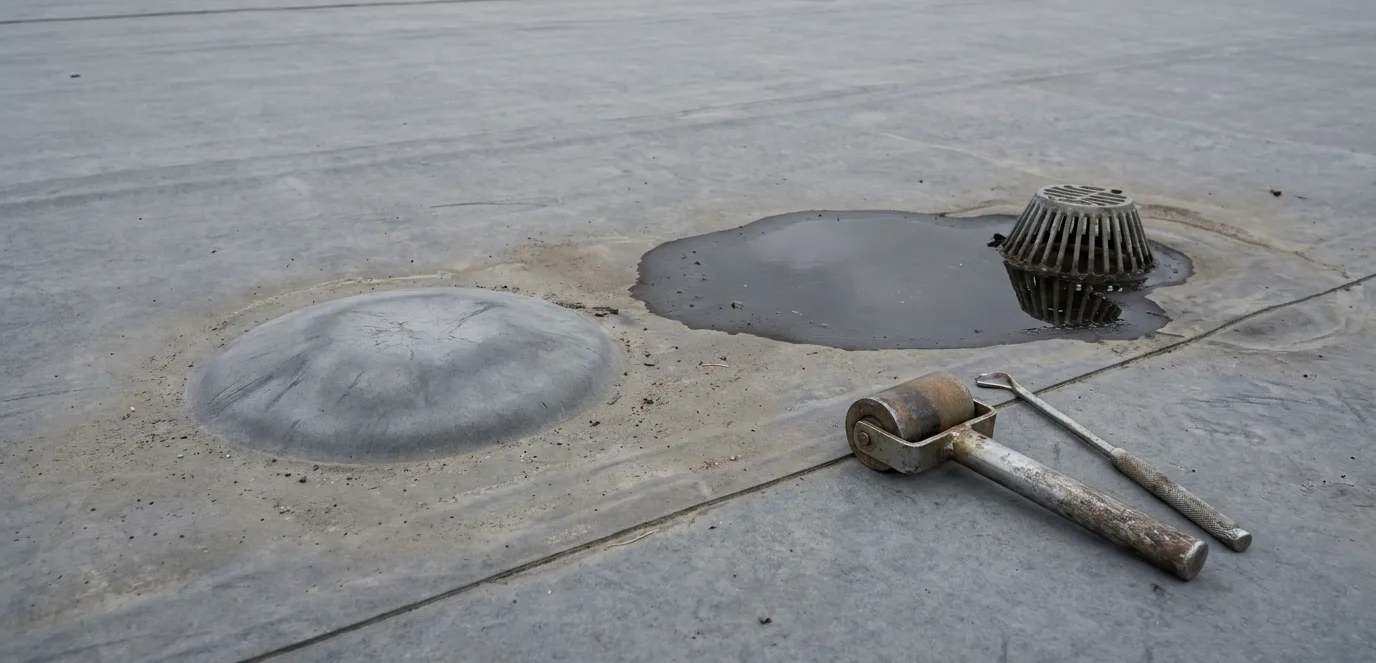
Visible Indicators of Flat Roof Problems
- Dark streaks running down interior walls below roof deck
- Bubbles or raised areas that move when pressed
- Cracked coating exposing the base felt or felt layers
- Debris rings around drains that stay wet days after rain
- Soft spots felt when walking near HVAC curbs
Common Causes of Membrane Failure
Standing water softens adhesives at seams until the lap opens during freeze-thaw cycles. Technicians often find that a single clogged scupper created the pond that later lifted an entire row of seams. Once opened, the gap lets wind-driven rain reach the insulation and deck.
UV exposure dries out the surface coating until hairline cracks form above the reinforcement scrim. Water enters these micro-cracks and travels laterally under the membrane, creating the alligatoring pattern seen on older modified bitumen systems. Shawnee County Roofing Services crews cut test samples to confirm how deep the damage reaches.
Thermal movement pulls flashings away from penetrations when the metal and membrane expand at different rates. A loose pipe boot or curb flashing is the usual entry point on commercial flat roofs that receive daily equipment vibration.
What Technicians Measure and Record
Technicians begin by walking every square foot while noting slope direction with a two-foot level. They record the depth of any pond that remains after forty-eight hours and mark those locations on a roof plan. Infrared scans then reveal wet insulation that must be removed before repairs begin.
Seam adhesion is tested by lifting the edge of each lap with a flat bar. If the felt delaminates instead of the adhesive releasing, the entire section is scheduled for replacement. Drain strainers are removed and the leader pipe is checked for blockages that force water back onto the field.
All penetrations receive close inspection for proper flashing height and termination bars. Technicians measure the distance from the membrane surface to the top of each flashing to confirm code-compliant coverage against wind-driven rain.
Repair and Replacement Choices
Small isolated tears receive a three-course patch using compatible membrane, mesh, and coating. The patch extends six inches beyond the damage in all directions so that the new seam sits outside the stressed area. Shawnee County Roofing Services stocks both TPO and EPDM patch material to match existing roofs.
When seams have opened across multiple bays, a full strip-in with new membrane is performed. The old lap is cut back, the insulation is dried or replaced, and a new reinforced sheet is welded or adhered according to manufacturer requirements for that system.
For surfaces with widespread coating failure but sound membrane underneath, a restoration coating restores UV protection. Two coats of acrylic or silicone are applied after power washing and seam reinforcement, extending service life without full removal.
Materials Used on Flat Roofs
EPDM sheets remain popular because they tolerate ponding better than many other single-ply products. Technicians weld or tape seams with manufacturer-approved accessories that match the membrane thickness. Shawnee County Roofing Services carries both 45-mil and 60-mil rolls for different wind zones.
TPO offers heat-welded seams that create a monolithic surface when properly executed. The material resists oil and grease from rooftop equipment, making it suitable for restaurant and manufacturing buildings. Technicians check weld strength with a probe after every seam is completed.
Modified bitumen is often used for flashings around curbs and walls because it conforms to irregular shapes. Two-ply systems with a granule surface provide additional protection at high-traffic areas near ladders and access doors.
Flat Roof Repair questions
How do I know if my flat roof needs more than a coating?
Technicians lift sections of membrane and check insulation moisture content. If water has reached the deck or multiple seams show delamination, coating alone will not solve the issue. A full assessment determines whether patches, strip-ins, or replacement is required.
Can homeowners clear debris safely before a visit?
Homeowners may remove loose leaves and branches from drains and valleys using a plastic rake from the ground or a stable ladder. Avoid walking on wet membrane or attempting to lift seams. Note the locations of any interior water stains and photograph them for the crew.
What material works best over an existing modified bitumen roof?
A reinforced acrylic or silicone coating adheres directly to clean modified bitumen after proper preparation. For areas with open seams or wet insulation, a new TPO or EPDM membrane is installed over a recovery board to provide a fresh watertight surface.
How long does a typical flat roof repair last?
Isolated patches last five to seven years when installed over dry substrate. Larger strip-in repairs or coatings can add ten to fifteen years depending on drainage correction and foot traffic. Shawnee County Roofing Services documents each repair with photos for future reference.
Schedule Flat Roof Repair
Contact Shawnee County Roofing Services to have technicians inspect membrane condition and drainage on your flat roof.