
Roof Leak Repair
Technicians follow water stains to the source, remove the affected shingles or membrane, install new underlayment, and seal the patch so water travels over the repair instead of beneath it.
Roofing · the USA
Shawnee County Roofing Services sends crews to roofs across the USA to locate entry points, replace damaged sections, and restore weather protection on shingle, flat, and metal systems.
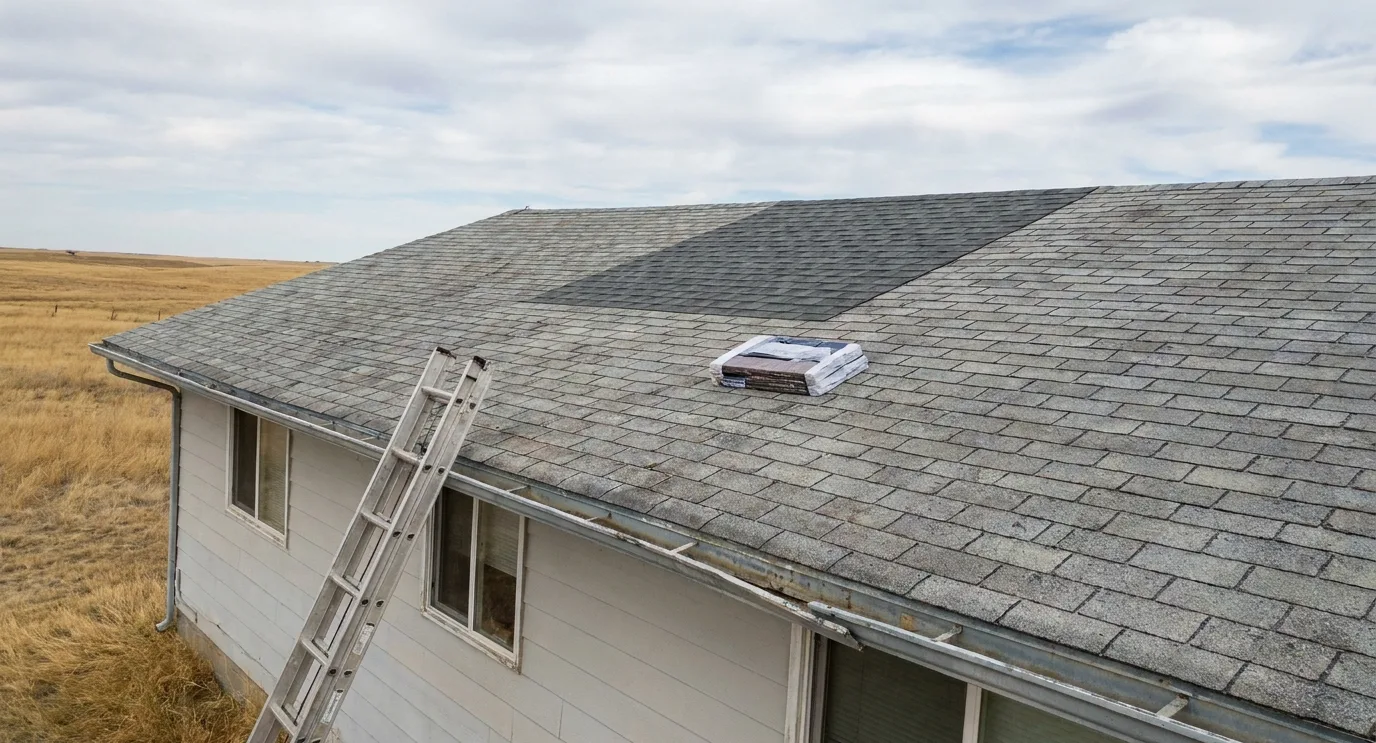
Technicians start at the ridge and work downward, checking each course for lifted edges, missing granules, and water stains on underlayment.
Every exposed nail and staple is examined because wind-driven rain often follows the shank path into the deck.
Flashing joints and valley overlaps are lifted where needed so water cannot travel under the metal and into the attic space.
Our crews handle targeted fixes that keep an existing roof functioning. Each service addresses a common failure point with materials that match the original construction.
Technicians follow water stains to the source, remove the affected shingles or membrane, install new underlayment, and seal the patch so water travels over the repair instead of beneath it.
Individual damaged shingles are lifted, the nails are extracted without tearing surrounding tabs, and new shingles are woven in to maintain the existing pattern and wind resistance.
Rusted or pulled flashing is cut out at the step or counter line, new pieces are bent to match the roof pitch, and sealant is applied only at the top edge to allow drainage.
Crews map hail and wind impacts by granule loss and creasing, replace only the crushed shingles, and check for hidden fractures in the underlayment that would allow water migration.
A walk is made from ridge to eave on every slope, noting soft spots, granule erosion, and fastener pop, then a written map shows which areas need attention first.
Sagging sections are rehung to maintain the correct pitch, seams are cleaned and resealed, and downspout elbows are checked so water moves away from the foundation line.
Blisters and splits are cut open, the wet insulation is removed, new boards are installed level, and a compatible membrane patch is welded in with proper overlap.
Old layers are stripped to the deck, damaged sheathing is replaced, new underlayment is rolled out with full coverage, and shingles or membrane are installed to current nailing schedules.
Water marks on ceiling drywall usually trace back to a failed valley or a lifted shingle tab that allowed rain to run under the felt. Granule loss in gutters after a storm shows the surface has worn thin enough for hail or wind to create entry points. Our technicians look for these signs first because they point directly to the layer that needs attention.
Place a bucket under any active drip and move furniture or boxes away from the wet area so water does not reach electrical outlets or carpet. Open attic access if safe and note the location of the stain relative to the ridge or a plumbing stack. These steps give the crew a clear starting point when they arrive on site.
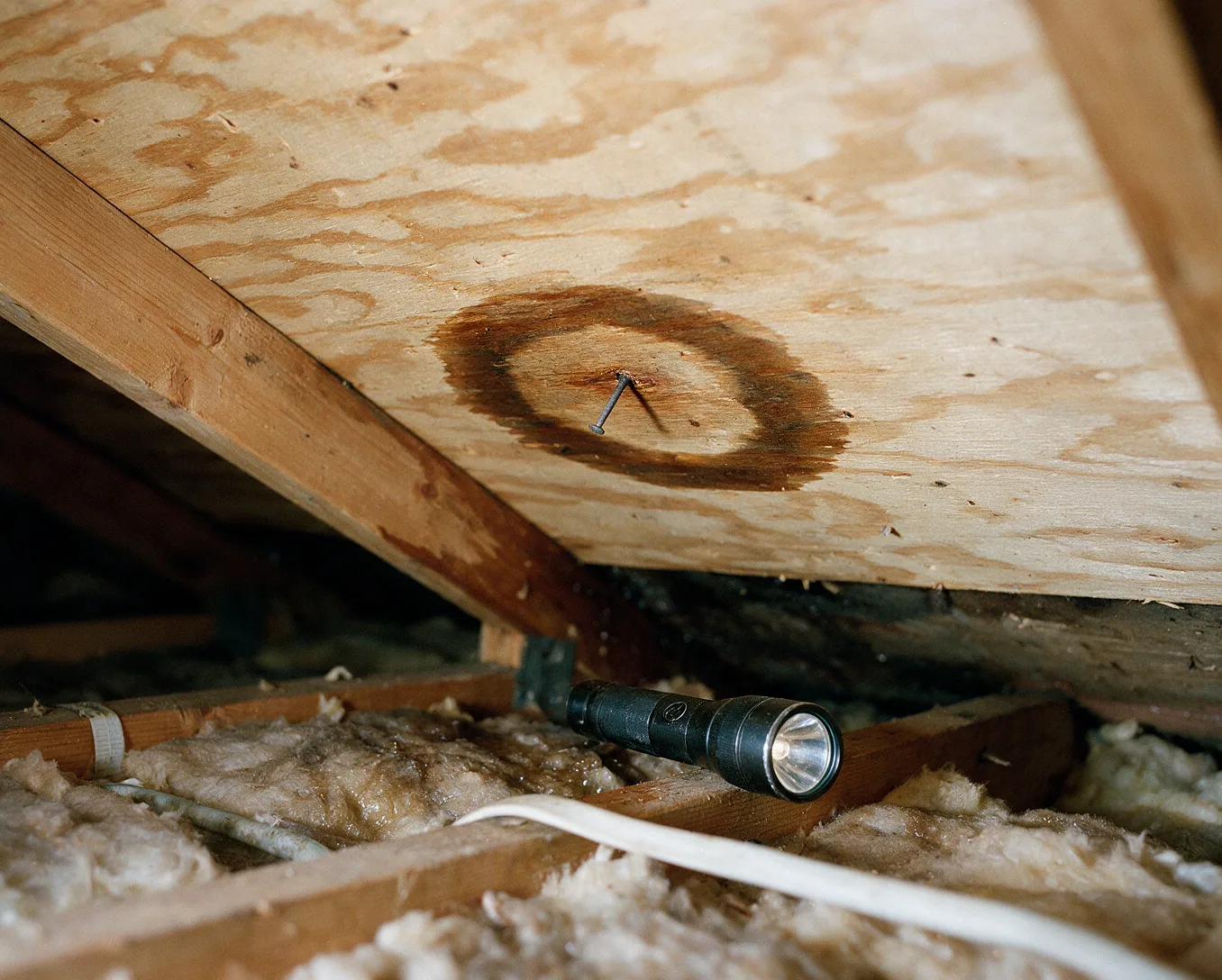
Shawnee County Roofing Services follows a set sequence so each roof receives the same attention regardless of size or location across the USA.
The lead technician meets the property contact, then climbs every accessible slope to mark visible damage before any tools are opened.
Water stains inside are matched to roof penetrations, valleys, and nail lines so the crew knows which layer must be opened.
Shingles or membrane are selected to match the existing color and thickness so the repair does not stand out or create a new weak seam.
After the patch is installed, a hose test is run over the repair while someone watches inside to confirm water no longer enters the structure.
A technician walks the roof slope by slope, lifting shingles only where needed to inspect the felt and deck. Any wet insulation or rotted wood is marked and removed. New material is cut to fit the opening so the patch sits flat and the water path continues uninterrupted over the repair.
The crew counts the number of failed courses and checks whether the remaining shingles still hold fasteners. When damage stays below twenty percent of the slope and the underlayment is intact, a targeted repair restores protection. If the deck shows widespread rot or multiple layers have already been added, the entire slope is replaced to prevent future leaks at the same locations.
The number of squares that must be opened, the type of underlayment required, and whether decking needs replacement all change the amount of labor and material. Steep pitches or multiple stories add time because each bundle must be carried higher and safety lines must be reset more often. Older roofs with multiple layers underneath take longer to strip before a clean repair can begin.
Homes with original sheathing often have wider rafter spacing, so extra care is taken to land nails in solid wood. Rental properties receive the same slope-by-slope inspection, and open areas are closed up before the crew leaves so the unit can be reoccupied without extended exposure to weather.
Technicians walk the roof and lift shingles along suspected courses, looking for wet felt or rust on nails. They also check the underside of the deck from the attic when access allows.
Yes, when the damage is limited to one or two courses and the surrounding underlayment remains dry. The crew removes only the affected area and installs new material that overlaps correctly.
The soft section is cut out and new plywood or OSB is fastened to the rafters so the patch has solid support before shingles are laid back over it.
Crews carry membrane patches and compatible adhesives for modified bitumen and EPDM systems, allowing the same targeted repair approach used on sloped roofs.
Shingles are chosen from the same manufacturer line so granule color and tab shape line up with the existing field.
Most single-slope repairs are completed in one visit, once the source is located and the correct material is on hand.
Contact Shawnee County Roofing Services to have a technician inspect the roof and explain which areas need attention.