
Roof Leak Repair in the USA
Shawnee County Roofing Services handles Roof Leak Repair work across the USA. Our technicians follow water paths that start at missing granules or lifted nails and move downward along felt or synthetic underlayment until they reach the deck boards. They measure moisture levels in the attic space and note any discoloration on rafters before deciding whether a targeted patch or a section replacement will hold the line against further intrusion.
Technicians begin every Roof Leak Repair job by walking the slope to check nail lines and step flashing overlaps. They look for sealant cracks around pipe boots and valley metal that has pulled away from the deck. Once the entry point is confirmed they remove only the affected courses of shingles so the remaining roof stays intact while the repair area is rebuilt with matching underlayment and new fasteners. Shawnee County Roofing Services crews trace water paths on roof leak repair jobs then suggest viewing the full roof repair section.
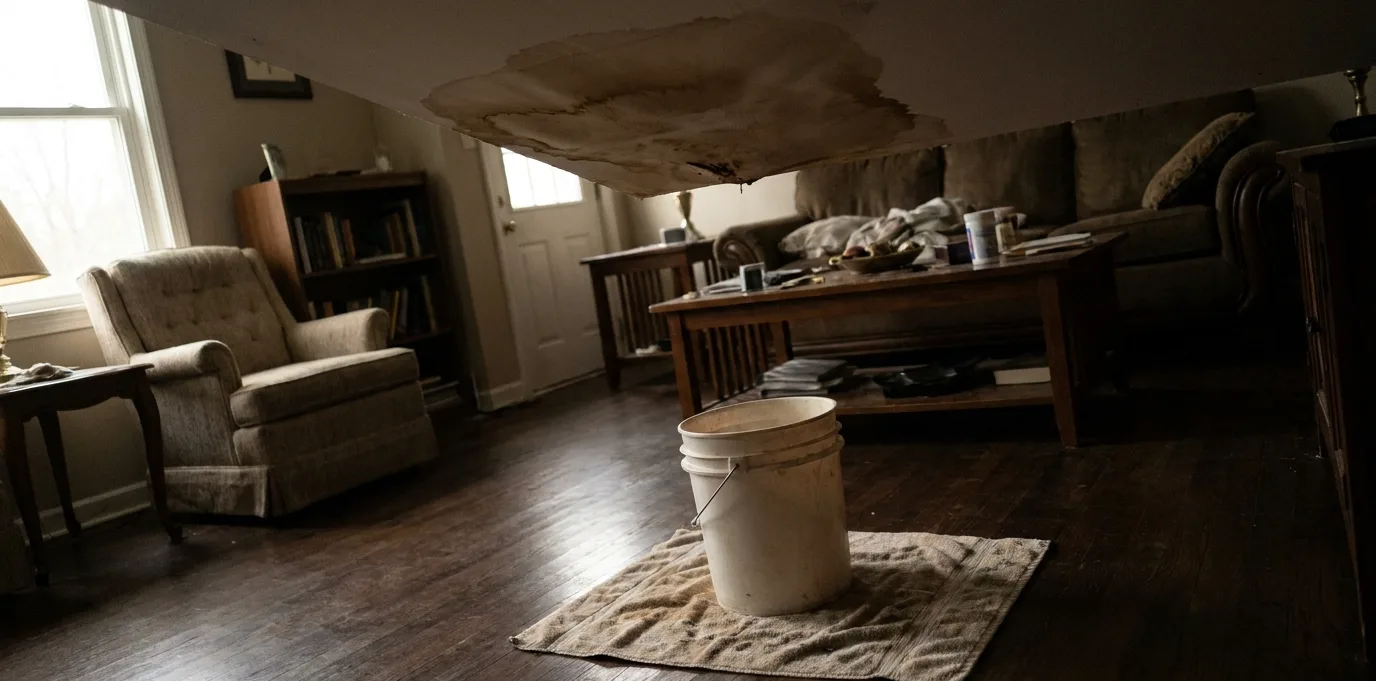
Visible Indicators of Active Roof Leaks
- Dark streaks forming on interior ceiling drywall below the roof plane
- Damp insulation visible through attic access after rainfall
- Soft spots felt on the roof deck when walking near valleys
- Granule loss collecting in gutters directly under a roof slope
- Daylight visible through nail holes when viewed from the attic
How Water Moves Through Roof Layers
Water enters at a lifted shingle edge or failed flashing joint and travels laterally under the course above until it finds a gap in the underlayment. It then follows the slope of the deck until it reaches a penetration or low point where it drips into the attic. Our technicians map this path by checking each layer in sequence so the repair addresses the actual entry rather than just the visible stain below.
Technicians measure the distance between the suspected leak point on the roof and the interior stain to account for the angle of the rafters. They also inspect the condition of the existing felt or synthetic underlayment around the affected area because older felt can wick moisture sideways even after the surface leak is sealed. This step prevents future callbacks once the new shingles are installed.
Parts and Materials Used in Leak Repairs
For most Roof Leak Repair jobs technicians carry ice-and-water membrane to replace damaged underlayment sections, self-adhering flashing tape for pipe boots, and color-matched shingles to maintain the existing pattern. They also use butyl sealant at metal overlaps rather than asphalt caulk because it stays flexible through temperature swings. All fasteners are ring-shank nails driven to the proper depth so the shingle does not lift again.
When step flashing needs replacement the crew bends new pieces on site to match the existing rake angle and overlaps each piece by at least two inches. Valley metal is checked for rust holes and replaced in full runs when corrosion has started. These material choices keep the repair area integrated with the surrounding roof so water continues to shed without new collection points.
Inspection Sequence During a Service Call
Our technicians start inside the attic by marking rafters that show water tracking or mold. They then move to the roof and examine every row of shingles along the marked line for lifted corners, missing tabs, or nail pops that have created entry points. Measurements are taken of the slope and the distance between penetrations so the repair can be sized correctly without overcutting good material.
Next they check all perimeter flashing, including drip edge, rake trim, and counter flashing at walls. Any sealant that has cracked or pulled away is noted for removal and replacement. The crew documents the condition of the underlayment by lifting a few courses so they can see whether the felt or synthetic layer has deteriorated beyond the visible leak zone.
Actions a Homeowner Can Take Before Arrival
A homeowner can safely check the attic for new stains after each heavy rain and note their location relative to exterior roof features such as chimneys or vents. Placing a bucket under an active drip prevents further ceiling damage while waiting for the crew. Avoid walking on the roof or attempting to apply sealant from a ladder because uneven footing can create additional leaks.
Keep gutters clear of debris so water does not back up under the first course of shingles. Photograph any interior stains and the exterior roof surface from the ground to show the technicians the exact areas of concern. These steps help the crew prepare the right materials before they arrive on site.
Roof Leak Repair questions
How do you find the exact spot where water enters the roof?
Technicians mark interior stains in the attic first then trace upward along rafters to the roof plane. They lift shingles in a grid pattern around that point and check underlayment seams and nail penetrations until the water path is confirmed. This prevents unnecessary removal of good roofing.
What happens if the underlayment is wet but the shingles look fine?
Wet underlayment is cut out in a rectangle that extends past the damp area by at least twelve inches. New ice-and-water membrane is installed over the deck and lapped under the remaining felt. Shingles are then reinstalled so the deck stays dry going forward.
Can a leak be fixed without replacing an entire slope?
Most leaks are isolated to a small section. Technicians remove only the courses needed to reach the damaged underlayment or flashing. The surrounding shingles stay in place and the repair blends by using matching products and maintaining the original nailing pattern.
Should I try to seal a leak from inside the attic?
Sealing from the attic side does not stop water at the roof plane and can trap moisture inside the deck. Homeowners should only place a container to catch drips and avoid spraying foam or caulk upward because it interferes with proper drainage once the exterior repair is completed.
Request Roof Leak Repair
Contact Shawnee County Roofing Services to schedule Roof Leak Repair across the USA and stop water from reaching the deck.